|
Birdwatching IN NORWAY |


|
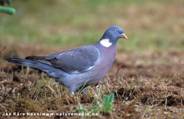
Wood Pigeon are not uncommon around the city. |
|
Like most big cities, Bergen has one or two places that you can get in some bird watching, either on your own or by joining one of the fjord cruises that take you along the surrounding fjords with tree covered slopes. Fløyen is well worth a visit at all times of the year. This is a huge area covering both woodland and mountain habitat. There are also several lakes that can be worth checking. Both White-tailed Eagle and Golden Eagle have been seen flying over the area, but it is not a everyday occurrence, and you would be lucky to see one of the two. Eurasian Sparrowhawk however is a little more common. If you get into true mountain habitat European Golden Plover can be found while Common Redshank and Common Sandpiper can be found in wetland areas. Away from the mountains the woodlands hold a good selection of the commoner Scandinavian species. Wood Pigeon arrive in good numbers during the spring while Great-spotted Woodpecker can be found throughout the year. Meadow Pipit will be common on the moorland habitats while its near cousin the Tree Pipit can be seen in the woodlands. Five species of thrush can be found with Ring Ouzel preferring the more mountainous areas. From spring, warblers can be seen with Icterine Warbler being the most of interest, otherwise Blackcap, Northern Chiffchaff and Willow Warbler being the commonest. Goldcrests can be seen at all times of the year, while Spotted and Pied Flycatchers arrive during the spring. Members of the tit family are well represented with seven species having been recorded though Crested Tit and Long-tailed Tit numbers can vary. Both European Nuthatch and Eurasian Tree Creeper can also be found. Members of the finch family are also well represented with Common Chaffinch and Greenfinch being the commoner. Siskin and Redpoll numbers can vary, in years with good seed production there can be large mixed flocks. Common Crossbill can be found and Parrot Crossbill has been seen, though this species is not regular. Bullfinch can also be seen. Back in mountain habitat, the Twite is not uncommon and Snow Bunting have been recorded. How To Get There: Mount Fløyen can be reached by walking to the top of the mountain along the many roads and paths that lead into the area. Otherwise most visitors take the mountain train "Fløibanen" which is a great experience in its own right. The fish quay at Bontelabo is always worth a visit during the colder months. Gull numbers are usually good with the chance of Iceland or Glaucous Gulls. Otherwise there can be small numbers of Mallard, Tufted Duck and Common Eider and both Common Guillemot and Little Auk have been seen . Please remember that this is an industrial site with a lot of fork-lift trucks working the area. How To Get There: The fish quay is situated within walking distance of the town center. Situated near the Fishing Museum and Skoltegrunnskaien. Lillelungeren is the small lake in the centre of Bergen. Once again the area is best in winter, and worth checking for rarer gulls. Ringed-billed Gull is seen most winters. Otherwise both Glaucaous and Iceland Gull have been seen. During the past few years Peregrine Falcon has been know to attack the flocks of gulls. Store Lungegårdsvatnet is a larger lake with a path around two sides. Once again a good gull location during the winter, and especially if it is frozen. Otherwise Mallard, Tufted Duck and one or two Common Goldeneye can usually be seen. Common Pochard and Greater Scaup have also been recorded, but these species are uncommon, and mostly seen during the colder months. During summer it is not uncommon to see Arctic Tern fishing on the lake. How To Get There: The lake is situated about 1km from the main bus and railway station. There is a well marked path along the back side of the lake, you can also stand on the bridge marked HIB on the Bergen map. Nygardsparken is situated near the Zoological Museum. This is typical park habitat with a rich variety of shrubs, trees and bushes. Though there is not a great selection of species to be seen, most winters there is a small flock of Hawfinch that can be seen. These can stay around until spring. One note of warning, the park is sometimes used by drug addicts so it is not advisable to visit the park early in the morning or late in the evening when there are few people about. During the middle of the day, there should be no problems. How To Get There: From the city centre, follow Christies Gate up to the Zoological Museum. To the left of the museum you will see a road that is called Parkveien This leads to one of the main entrances to the park. |

|
Bergen |



|
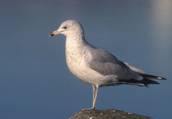
Ringed-billed Gull has been seen several times, mostly during the colder months |